
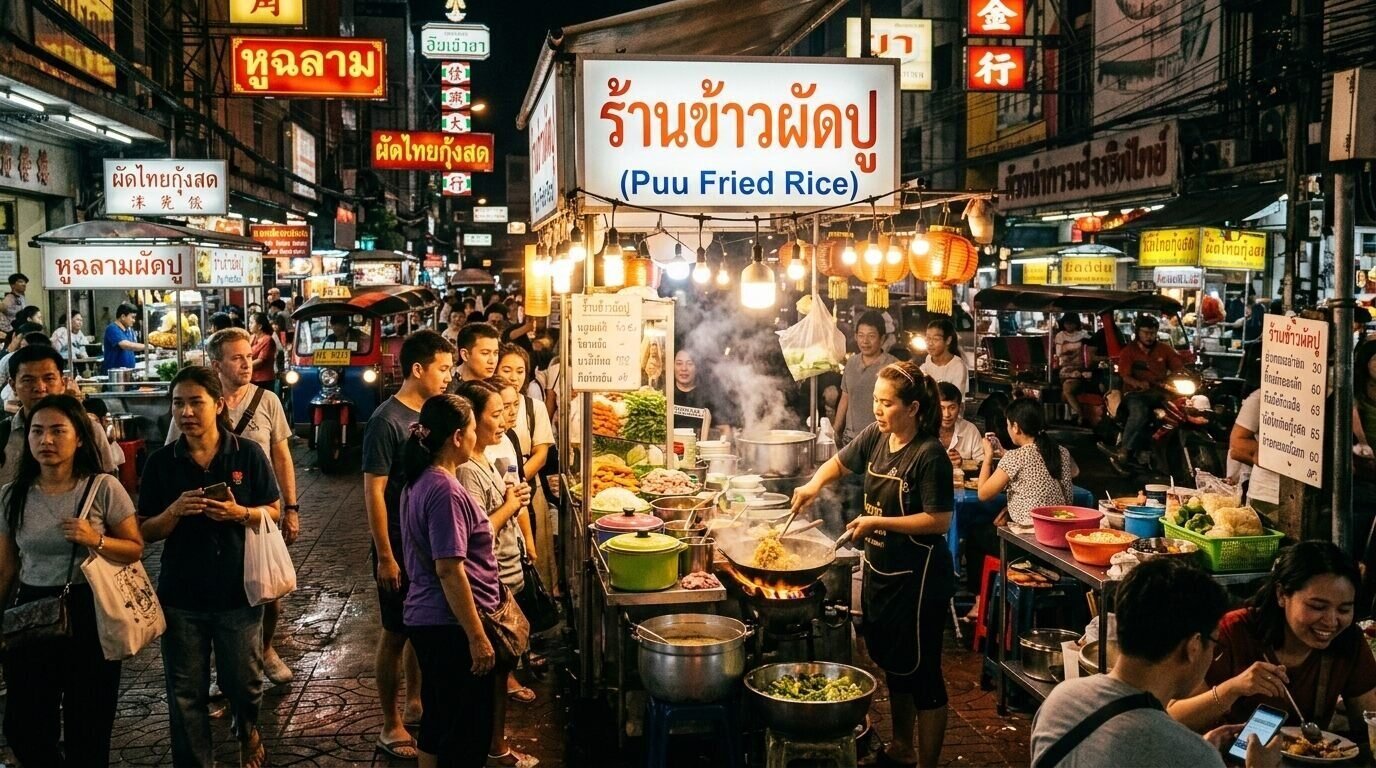
Bangkok is one of the world’s great food cities. You can eat brilliantly for a few dollars at a street stall, then book a Michelin-starred table the same evening.
If you’re wondering what to eat in Bangkok on your first trip, this guide covers the 15 must‑try dishes, famous stalls worth the detour, the best neighborhoods for eating, and practical tips on prices, spice, and etiquette.
Prices are shown in Thai baht (THB) with approximate US dollar equivalents.
15 Must-Try Dishes in Bangkok
These are the dishes most first-time visitors should prioritize. Prices are typical street and casual-restaurant prices for 2026; US dollar figures use roughly 34 THB to $1 and are rounded.
Everyday Thai Classics
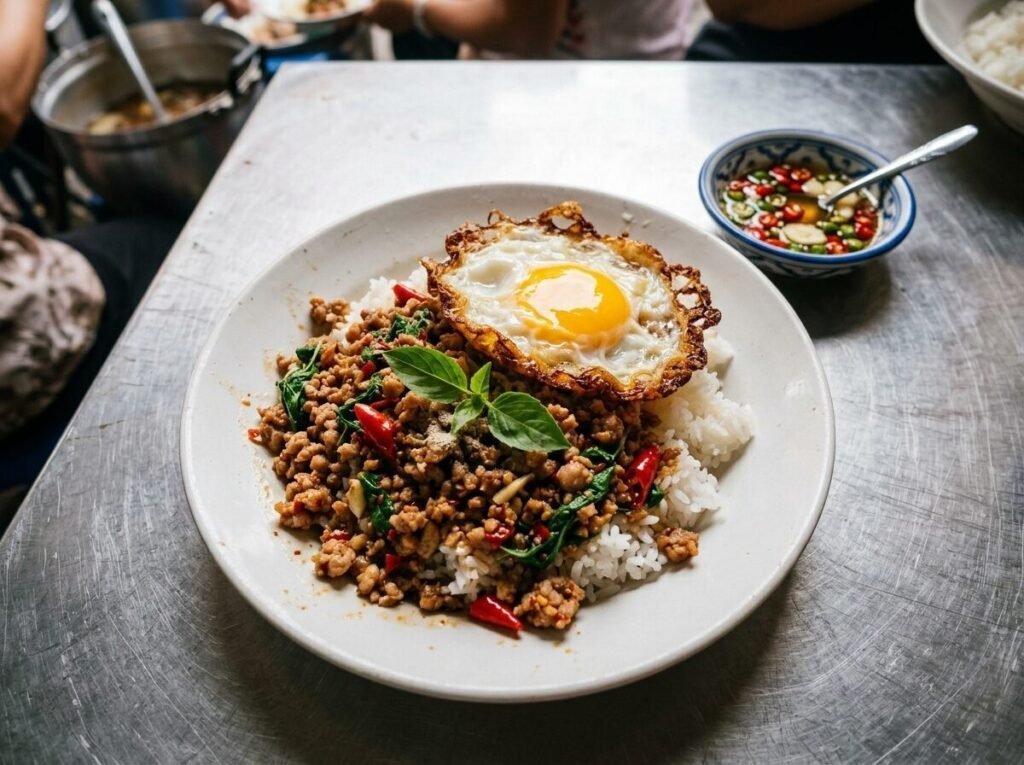
These are the plates you’ll see on every street corner and in every office canteen. Most cost under $3, arrive in minutes and are cooked to order, which makes them the easiest way to start eating like a local.
| Dish | What it is | Typical price | Where to look |
|---|---|---|---|
| Pad kra pao moo | Pork stir-fried with holy basil and chili over rice, usually with a fried egg. Bangkok’s true everyday meal. | 60–90 THB (~$2–3) | Chinatown, Sukhumvit side streets, office districts at lunch |
| Pad thai | Rice noodles with egg, tofu or shrimp, peanuts and tamarind sauce. | 50–80 THB (~$1.50–2.50) at street stalls | Old City and Khao San side streets; Thip Samai for the famous egg-wrapped version (sit-down, higher prices) |
| Som tam | Spicy, sour green papaya salad, often eaten with grilled chicken. | 50–90 THB (~$1.50–2.75) | Street-food areas and Isaan-style restaurants |
| Khao man gai | Poached chicken over chicken-fat rice with ginger-soy sauce. | 50–70 THB (~$1.50–2) | Local lunch stalls across the city |
| Khao kha moo | Pork leg braised in five-spice, served over rice with pickled greens. | 50–80 THB (~$1.50–2.50) | Chinatown and neighborhood rice shops |
Noodles and Soups
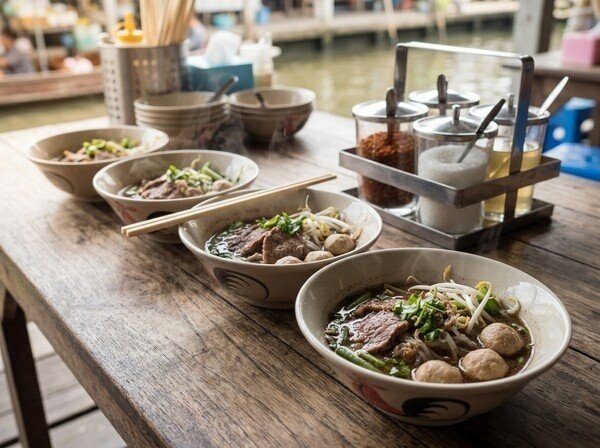
Noodle soup is Bangkok’s all-day comfort food. You choose the noodle, the broth and the toppings, then season the bowl yourself at the table with chili flakes, sugar, fish sauce and vinegar.
| Dish | What it is | Typical price | Where to look |
|---|---|---|---|
| Kuay teow | Noodle soup: pick your noodle (sen lek, sen yai, ba mee) and topping. | 50–80 THB (~$1.50–2.50) | Chinatown and the Old City |
| Kuay jap (guay jub) | Rolled rice noodles and crispy pork in a peppery broth. | 60–100 THB (~$2–3) | Yaowarat after dark |
| Boat noodles | Small bowls of rich, dark beef or pork broth. Locals order several. | 40–60 THB (~$1.25–1.75) per bowl | Victory Monument |
| Tom yum goong | Hot and sour shrimp soup with lemongrass and lime leaf. | 100–200 THB (~$3–6) | Casual Thai restaurants citywide |
Curries and Rice
| Dish | What it is | Typical price | Where to look |
|---|---|---|---|
| Green curry | Creamy, aromatic coconut curry with chicken, beef or vegetables. | 80–150 THB (~$2.50–4.50) | Curry-and-rice stalls, casual restaurants |
| Massaman curry | Mild, slightly sweet curry with potatoes and peanuts. | 100–200 THB (~$3–6) | Thai restaurants |
| Khao pad | Thai fried rice with pork, chicken or crab. | 50–80 THB (~$1.50–2.50); crab costs more | Street stalls everywhere |
Street Snacks and Desserts
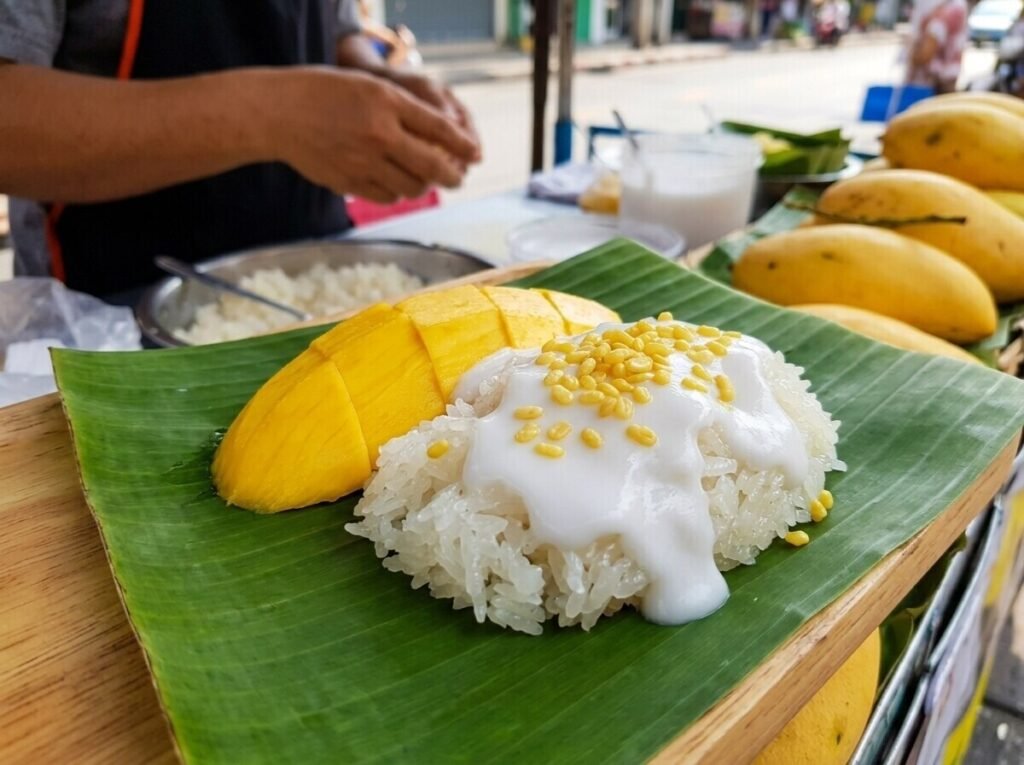
Snacks are where Bangkok’s street food gets fun. Grab a few pork skewers on the way to the BTS in the morning, and save room for something sweet after dinner.
| Dish | What it is | Typical price | Where to look |
|---|---|---|---|
| Moo ping | Sweet-marinated grilled pork skewers, often with sticky rice. | 10–20 THB (~$0.30–0.60) per skewer | Markets and outside BTS stations, mornings |
| Mango sticky rice | Coconut sticky rice with ripe mango. | 60–100 THB (~$2–3) | Street stalls and dessert shops |
| Coconut ice cream | Served in a coconut shell with peanuts or sticky rice. | 40–60 THB (~$1.25–1.75) | Markets and tourist areas |
6 Famous Places Worth the Trip
If you want to eat at the stalls food lovers travel for, start with these. Most are cash only, and several close one or more days a week, so check Google Maps on the day.
| Place | Area | What to order | Know before you go |
|---|---|---|---|
| Raan Jay Fai | Old City (Maha Chai Road) | Crab omelet, drunken noodles | Michelin-starred street stall. Dishes run about 800–1,200 THB (~$24–35). Same-day queue numbers from 9:00 AM; closed Sunday–Tuesday. |
| Thip Samai | Old City (Maha Chai Road, near Wat Saket) | Egg-wrapped pad thai with river prawns | Open since 1966 and famous for wok-fried pad thai. Expect roughly 90 THB for a basic plate and up to about 300 THB with large prawns. Evenings, with a queue. |
| Pa Aor Tom Yum Goong Noodles | Pom Prap (near Chinatown) | Tom yum noodles with a whole river prawn | Bib Gourmand stall. Queue from late morning; closed Sundays. |
| Guay Jub Mr Joe | Chinatown (Yaowarat Soi 11) | Kuay jap with extra crispy pork belly | Late-night cart with plastic stools on the curb. |
| Nai Mong Hoi Tod | Chinatown (Phlap Phla Chai Road) | Crispy oyster pancake (hoi tod) | Bib Gourmand stall; closed Tuesdays. |
| Victory Monument boat noodle alley | Victory Monument | Three or four small bowls of boat noodles | A row of canal-side stalls with bowls around 50 THB (~$1.50). |
Best Neighborhoods for Eating in Bangkok
Bangkok is sprawling, so plan your eating by area. These five neighborhoods give food-focused visitors the most for their time.
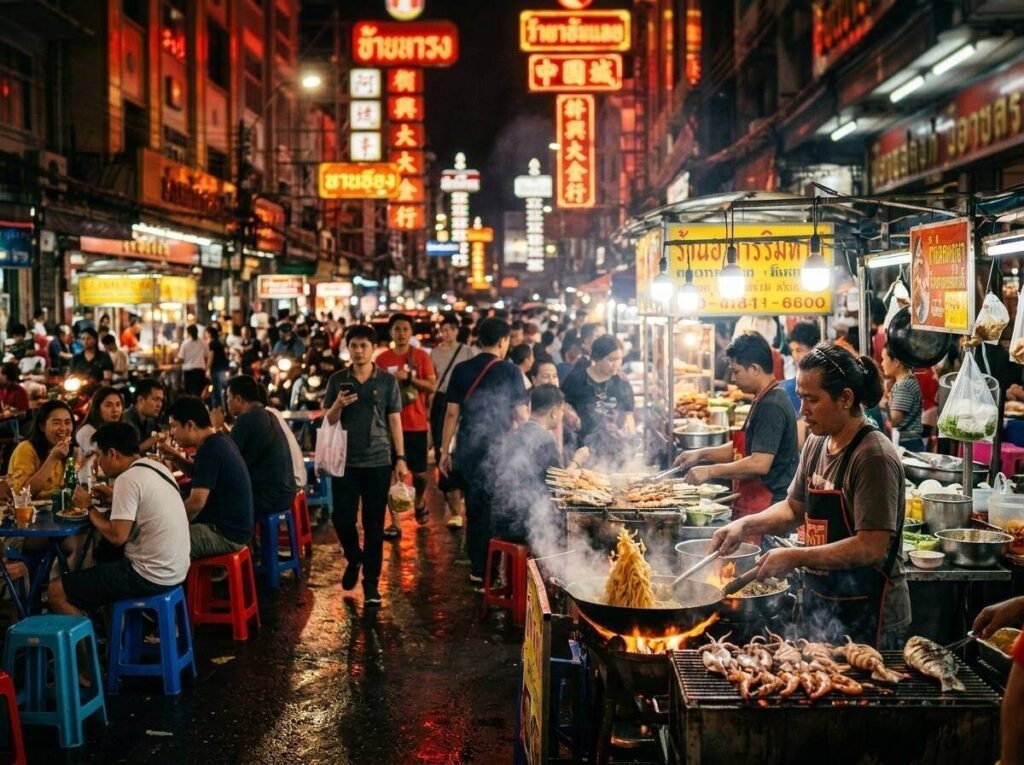
Chinatown (Yaowarat)
- Best for: Thai-Chinese street food, seafood, noodles and late-night atmosphere.
- When to go: Evening, when vendors set up along Yaowarat Road and its side lanes.
- What to try: Roast duck, dim sum, fish maw soup, kuay jap, grilled seafood and oyster pancakes.
- Tip: Start near Wat Mangkon MRT and work down Yaowarat Road and Soi Phadung Dao. Long lines usually mean fresh food and fast turnover.
Old City (Rattanakosin and Khao San)
- Best for: Classic Thai dishes and easy eating between temples.
- When to go: Lunch near the temples; evening around Khao San Road.
- What to try: Pad thai, som tam, grilled skewers and mango sticky rice.
- Tip: Walk the side streets off Khao San Road for better value and a more local feel.
Sukhumvit, Silom and Sathorn
- Best for: Modern Thai, international food, rooftop dining and business-lunch deals.
- When to go: Lunch for office-area deals; evening for dinners and bars.
- What to try: Refined Thai cooking, fusion dishes and street snacks outside BTS stations.
- Tip: Sukhumvit Soi 38 in Thong Lo was once a famous street-food strip, but it was cleared in 2016. A few stalls remain near the BTS end of the soi, so treat it as a quick snack stop rather than a destination.
Ari and Phaya Thai
- Best for: Local cafés, brunch and neighborhood Thai restaurants.
- When to go: Daytime and early evening.
- What to try: Specialty coffee, modern Thai breakfasts and updated versions of the classics.
- Tip: A good choice for a residential, less touristy food day.
Riverside
- Best for: Scenic dinners, hotel restaurants and special occasions.
- When to go: Sunset and evening.
- What to try: Upscale Thai and international dining with river views.
- Tip: Combine dinner with a Chao Phraya ferry ride.
A Simple 1-Day Food Route
If you only have one day to eat, this route moves from the Old City to Chinatown and balances variety with short travel times.
- Breakfast: Jok (rice porridge) or khao tom near your hotel, or moo ping with sticky rice from a morning stall.
- Mid-morning: Walk Pak Khlong Talat, the flower market, and snack on fresh fruit or coconut ice cream.
- Lunch: Head to the Old City for pad thai, som tam and a bowl of kuay teow. Arrive before noon to beat the office crowd.
- Afternoon: Take a café break in Ari or Sukhumvit, then grab mango sticky rice near a BTS station.
- Evening: Graze Yaowarat Road in Chinatown for seafood, oyster pancakes, kuay jap and dessert, or join a guided Chinatown food walk.
Bangkok Food Tours Worth Booking
A guided food tour is the fastest way to get your bearings, especially on your first night. Popular evening tours on major booking platforms start at roughly 2,100–2,800 THB (~$60–80) per person and last 3.5–4 hours.
- Chinatown night food walks: Yaowarat and its side lanes, usually with 8–12 tastings. Ideal if the choice feels overwhelming.
- Backstreet and neighborhood tours: Shophouse restaurants and local markets, often with pad kra pao, papaya salad and braised pork leg.
- Michelin and tuk-tuk tours: Combine street food with Michelin-recognized stalls, often with hotel pickup.
- Floating and train market day trips: Damnoen Saduak or Amphawa floating markets plus the Maeklong Railway Market.
Before you book, check the number of tastings, whether drinks are included, the group size, vegetarian and spice options, and the meeting point.
Where to Stay in Bangkok for Food Lovers
Your base decides how easily you can eat your way around the city. For a first food trip, Chinatown or Sukhumvit suits most travelers.
| Area | Best for | Pros | Cons |
|---|---|---|---|
| Chinatown and Old City | Street-food lovers who want to be in the action | Walk to the best street food; historic atmosphere; many budget and mid-range hotels | Noisy at night; few BTS stations in the Old City |
| Sukhumvit (Asok to Thong Lo) | Variety and easy transport | Excellent BTS access; huge range of restaurants; modern hotels | Spread out; feels less traditional |
| Silom and Sathorn | Food plus shopping and nightlife | Central; mix of street food and fine dining; close to the river | Business-oriented; quieter on weekends |
| Ari and Phaya Thai | Repeat visitors who prefer a local feel | Great cafés and neighborhood restaurants; less touristy | Few major sights nearby |
Practical Tips for Eating in Bangkok
Typical Prices (2026)
| Type of meal | Price per person |
|---|---|
| Street noodle or rice dish | 50–90 THB (~$1.50–2.75) |
| Street snack (skewers, coconut ice cream) | 10–60 THB (~$0.30–1.75) |
| Casual restaurant main | 100–250 THB (~$3–7.50) |
| Upscale or Michelin-recognized restaurant | 500–2,000+ THB (~$15–60+) |
Tipping
Street stalls don’t expect tips. At casual restaurants, rounding up or leaving 20–100 THB is common. Higher-end restaurants often add a 10% service charge, so extra tipping is optional.
Spice Levels
Most places will adjust the heat if you ask. These three phrases cover it:
- Mai pet: not spicy
- Pet nit noi: a little spicy
- Pet mak: very spicy
Water and Ice
Don’t drink tap water; use bottled or filtered water. Ice at established restaurants and busy stalls is usually factory-made tube ice and generally safe, but skip it if you have a sensitive stomach.
Best Times to Eat
Lunch stalls run roughly 10:30 AM–2 PM. Evening street food starts around 5–6 PM and runs until 10–11 PM, or later in Chinatown. Carry small notes, because many stalls are cash only.
Useful Apps
- Google Maps: locations, opening days and reviews
- Google Translate: camera mode for Thai menus
- Grab: taxis, motorbikes and food delivery
Getting to Bangkok and Around
Most international flights land at Suvarnabhumi Airport (BKK); some regional and low-cost flights use Don Mueang (DMK).
From the Airport
- Airport Rail Link plus BTS or MRT: the cheapest way into the center from Suvarnabhumi.
- Taxi or Grab: easiest with luggage; expect roughly 300–500 THB (~$9–15) plus tolls and the airport surcharge, depending on where you’re going.
- Airport buses: cheaper, but slower and awkward with bags.
Getting Around the City
- BTS Skytrain and MRT subway: fast and reliable along the main corridors; avoid rush hour if you can.
- Taxis and Grab: best for late nights and areas off the rail lines. Insist on the meter or use app pricing.
- Tuk-tuks: fun for short rides, but agree on the price first.
- Chao Phraya ferries: useful for riverside sights and dinner spots.
Bangkok Food FAQ
Is street food in Bangkok safe to eat?
Yes, for most travelers. Choose busy stalls with high turnover, where food is cooked to order in front of you. Drink bottled water and go easy on raw dishes for the first day or two.
How much should I budget for food per day in Bangkok?
Eating mostly street food, about 500–800 THB (about $15–25) a day covers three meals and snacks. Add one sit-down restaurant meal and 1,000–1,500 THB (about $30–45) is more realistic.
What is the most famous food in Bangkok?
Pad thai is the best known abroad, but if you’re deciding what to eat in Bangkok day to day, pad kra pao is what most locals choose.
Which area of Bangkok has the best street food?
Chinatown (Yaowarat) is the strongest single area, especially after dark. The Old City and Victory Monument are close behind.
Do I need cash for street food in Bangkok?
Yes. Most stalls are cash only, and small notes (20 and 100 THB) make paying much easier.
Ready to Plan Your Bangkok Food Trip?
Bangkok rewards curious eaters. Pick a base in Chinatown or Sukhumvit, book one food tour early to get your bearings, then spend the rest of your trip working through the dishes above.
- Check flights and dates to Bangkok.
- Compare hotels in Chinatown, Sukhumvit or Silom.
- Save this guide and tick off the 15 dishes as you go.

Leave a Reply