
Where you stay in Bangkok decides how well you eat. The right neighborhood puts street stalls, late-night noodles and good breakfasts a short walk away; the wrong one leaves you sitting in traffic between meals. This guide compares the six areas that matter most to food-focused travelers, so you can choose a base that fits your style, budget and plans.
It’s written to go with our What to Eat in Bangkok guide, which covers the dishes and stalls themselves.
How this guide was made: it’s a researched guide based on neighborhood, transport and hotel listings. Room prices are rough 2026 ranges for mid-range hotels and change with the season, so check current rates before you book.
Best areas at a glance
Best for street food
Chinatown (Yaowarat)
Best for first-timers
Sukhumvit (Asok to Thong Lo)
Best all-rounder
Silom and Sathorn
Best local feel
Ari
Quick answer
- Best for street food: Chinatown (Yaowarat). Dense, walkable and packed with stalls, shophouse restaurants and late-night food.
- Best for variety and convenience: Sukhumvit (Asok to Thong Lo). Endless restaurants, cafés and street snacks, with excellent BTS Skytrain access.
- Best mix of food and nightlife: Silom and Sathorn. Busy lunch stalls, good restaurants and quick access to Chinatown and the river.
- Best for temples plus food: the Old City (Rattanakosin and Khao San). Classic Thai dishes between the sights, with fewer transport links.
- Best local, café-heavy feel: Ari. Neighborhood Thai restaurants, brunch and specialty coffee in a residential area.
- Best for special occasions: the Riverside. Scenic dinners and hotel restaurants, with less street food on the doorstep.
Chinatown (Yaowarat)

Best for: street-food lovers, atmosphere and short stays built around eating.
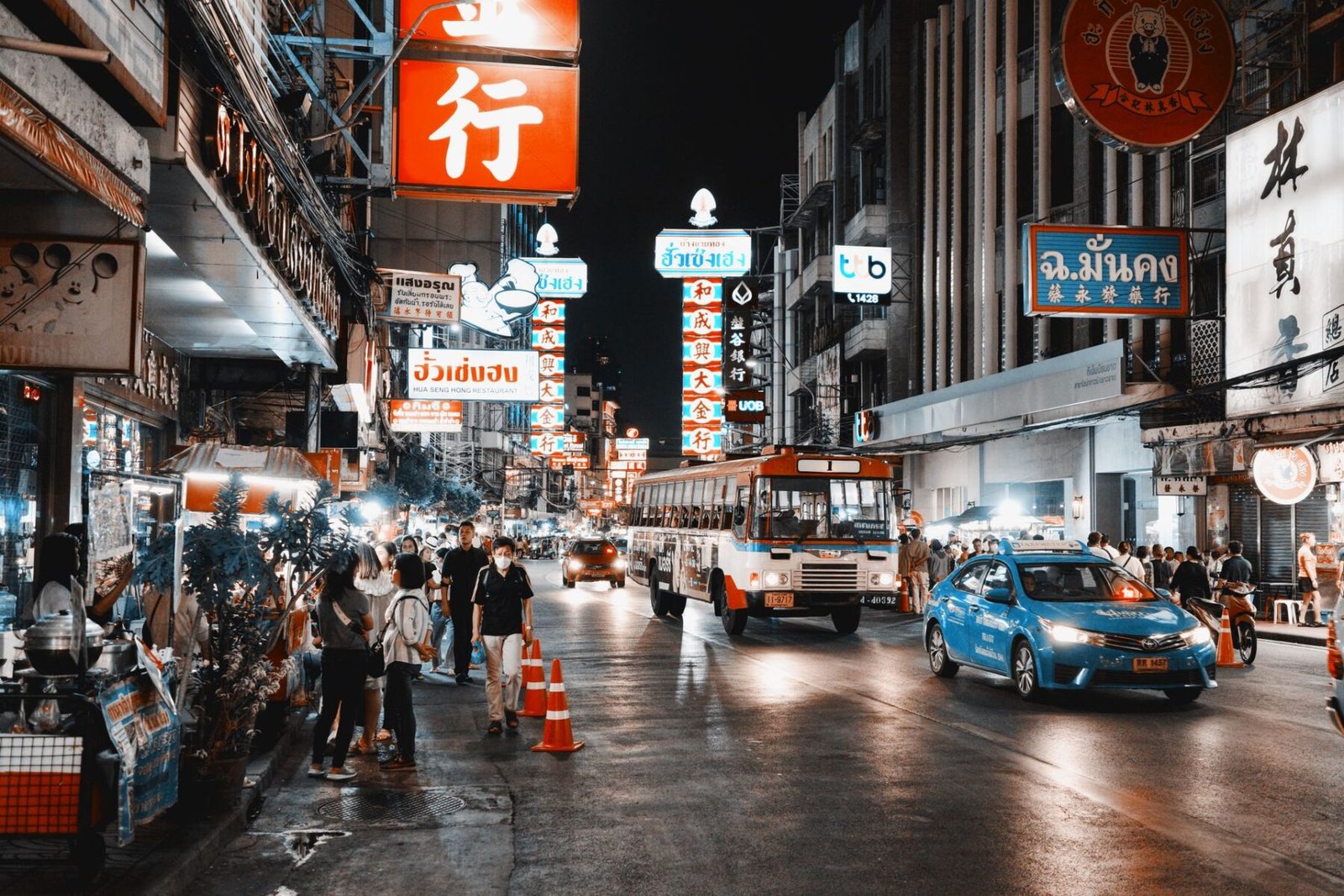
Neon-lit, crowded and intensely focused on food. After dark, Yaowarat Road and its side lanes turn into a huge open-air food court.
What to eat
- Roast duck, dim sum and Thai-Chinese dishes in old shophouses
- Seafood stalls, grilled river prawns and crispy oyster pancakes
- Noodle shops: kuay jap, tom yum noodles and more
- Late-night desserts and sweet soups
Getting around
MRT Wat Mangkon puts you right in the middle of Chinatown, and MRT Hua Lamphong is close by. Taxis and tuk-tuks are easy to find, but evening traffic is heavy.
Pros
- Some of the best street food in the city within walking distance
- Atmospheric streets that mix old and new
- A growing number of boutique hotels in restored shophouses
Cons
- Noisy, especially at night
- No BTS Skytrain; you rely on the MRT, taxis and walking
- Fewer hotel choices than Sukhumvit or Silom
Stay here if: eating is the main point of your trip and you want to step outside into the action.
Typical mid-range room: roughly ฿1,000–2,500 a night, with some pricier boutique options.
Sukhumvit (Asok to Thong Lo)
Best for: first-timers, variety and convenience.
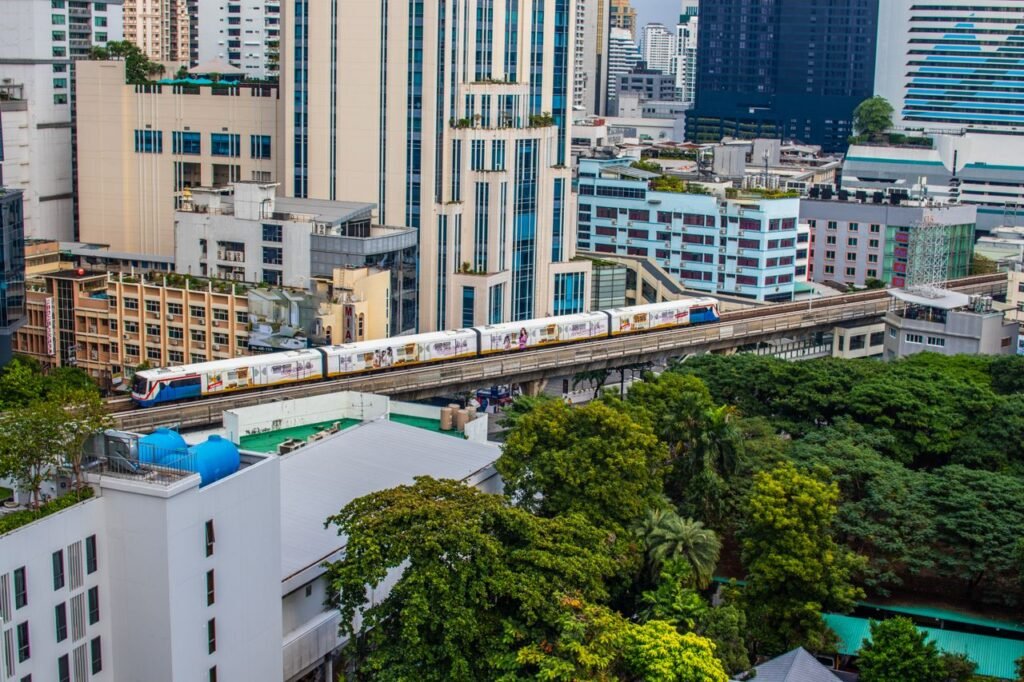
A long, busy corridor of malls, condos, bars and restaurants. Each soi (side street) has its own character, from backpacker-friendly to upscale.
What to eat
- Street snacks outside BTS stations: moo ping, mango sticky rice and noodles
- International restaurants, modern Thai and fusion cooking
- Thong Lo and Ekkamai: trendy cafés, cocktail bars and upscale Thai
Getting around
The BTS Skytrain runs along Sukhumvit, and MRT Sukhumvit connects at Asok, so most of the city is a train ride away. Taxis and Grab fill the gaps.
Pros
- A huge range of hotels, from budget to luxury
- Excellent transport links
- Restaurants for every budget
Cons
- Busy and touristy in parts
- Some sois are noisy late at night
- Spread out, so you’ll use the BTS a lot
Stay here if: it’s your first visit and you want convenience, plenty of choice and a mix of street food and restaurants.
Typical mid-range room: roughly ฿1,500–4,000+ a night, depending on the soi and hotel class.
Silom and Sathorn

Best for: street food plus nightlife, and a central base.
A business district by day that comes alive at night with bars, night markets and restaurants. More polished than Sukhumvit, but still varied.
What to eat
- Busy lunch stalls feeding the office crowd, especially around Silom’s side sois
- Evening street food near Patpong and the side streets
- Thai, Indian and international restaurants
Getting around
BTS Sala Daeng and MRT Si Lom connect here, and BTS Saphan Taksin is close to the river piers. Chinatown is a short MRT or taxi ride away.
Pros
- A strong street-food scene, especially at lunch
- Good bars and nightlife
- Central, with solid transport links
Cons
- Some parts are quiet on weekends
- Less old-Bangkok charm than Chinatown or the Old City
Stay here if: you want street food, restaurants and nightlife from one well-connected base.
Typical mid-range room: roughly ฿2,000–4,000 a night, with many options.
Old City (Rattanakosin and Khao San)

Best for: temple-hopping combined with classic Thai food, and budget stays.
Historic and full of temples. Khao San Road is the backpacker hub, and the surrounding streets are lined with guesthouses and casual restaurants.
What to eat
- Pad thai, som tam, grilled skewers and mango sticky rice around Khao San
- Classic Thai restaurants and riverside cafés
- Easy trips to Chinatown for more serious street food
Getting around
There’s no BTS here. MRT Sanam Chai serves the area near Wat Pho, and Chao Phraya river boats stop at piers along the river. Otherwise you’ll use taxis, tuk-tuks and buses.
Pros
- Walking distance to the Grand Palace, Wat Pho and other major sights
- Plenty of budget guesthouses and hostels
Cons
- Fewer high-end hotels
- Less convenient for the rest of the city
- Food near Khao San is more tourist-oriented
Stay here if: sights and temples come first and you’re traveling on a budget.
Typical mid-range room: many rooms under ฿1,500 a night; mid-range options are fewer than elsewhere.
Ari and Phaya Thai
Best for: a local feel, cafés and neighborhood Thai restaurants.
Residential and leafy, popular with young Thais and expats, and full of cafés, brunch spots and small restaurants.
What to eat
- Specialty coffee and modern Thai breakfasts
- Updated versions of the classics
- More sit-down cafés than street-food clusters
Getting around
BTS Ari and the stations around it connect quickly to central Bangkok.
Pros
- Relaxed, local atmosphere
- Great for slow mornings and café-hopping
- Less touristy than Sukhumvit or Khao San
Cons
- Few major sights nearby
- A smaller street-food scene than Chinatown or Silom
Stay here if: you’re a repeat visitor or staying longer and prefer a neighborhood feel.
Typical mid-range room: roughly ฿1,500–3,500 a night.
Riverside
Best for: scenic dinners, special occasions and luxury stays.
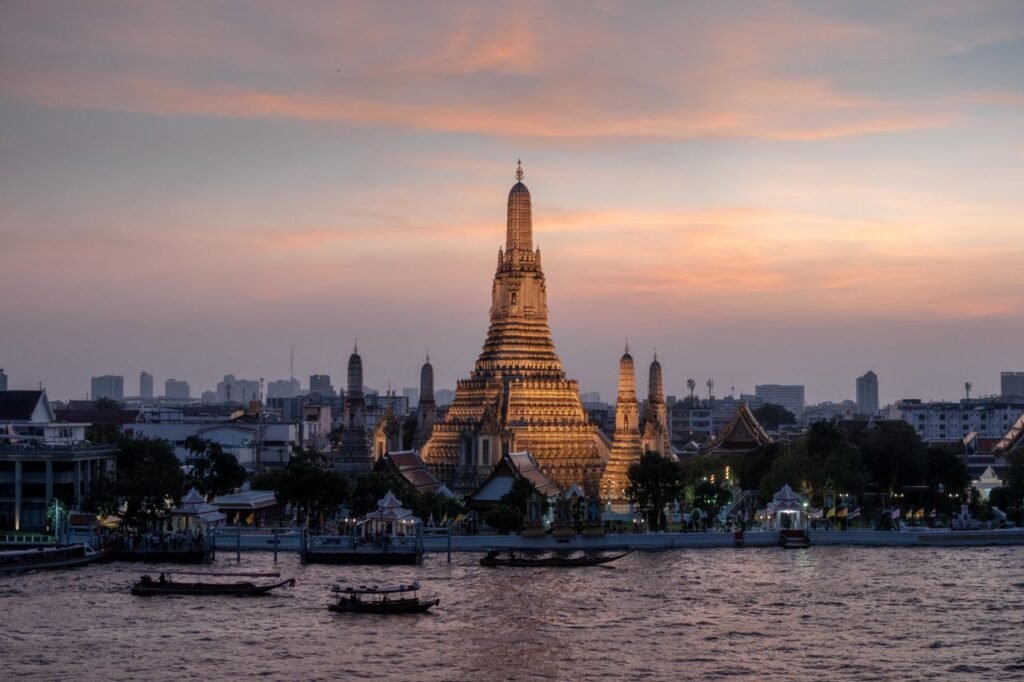
More resort-like, with large hotels, river views and a slower pace.
What to eat
- Upscale Thai and international restaurants with river views
- Hotel breakfasts and fine dining
- Easy access to piers and dinner cruises
Getting around
River boats and hotel shuttle boats link the piers, and BTS Saphan Taksin serves the southern stretch. You’ll need taxis or Grab for many inland trips.
Pros
- Beautiful views and a calmer atmosphere
- High-quality hotel restaurants and service
Cons
- Less street food right outside your door
- Usually pricier than other areas
- Less convenient for inland sights
Stay here if: you’re celebrating, want comfort and views, and don’t mind short rides to street food.
Typical mid-range room: roughly ฿3,000–8,000+ a night for mid- to high-end riverfront hotels.
The six areas compared
| Area | Best for | Food scene | Transport | Mid-range per night |
|---|---|---|---|---|
| Chinatown | Street-food lovers | Excellent, dense, late-night | MRT + taxis | ~฿1,000–2,500 |
| Sukhumvit | First-timers, variety | Very strong, diverse | BTS + MRT | ~฿1,500–4,000+ |
| Silom and Sathorn | Food plus nightlife | Strong, especially at lunch | BTS + MRT | ~฿2,000–4,000 |
| Old City | Temples, budget | Classic, tourist-friendly | MRT Sanam Chai, boats, taxis | ~฿800–1,500 |
| Ari | Local café feel | Modern Thai, cafés | BTS | ~฿1,500–3,500 |
| Riverside | Views, luxury | Upscale dining | Boats, BTS + taxis | ~฿3,000–8,000+ |
How to choose
- First time and want a bit of everything? Stay in Sukhumvit or Silom, and take the MRT to Chinatown in the evening.
- Here mainly to eat? Spend 1–2 nights in Chinatown, then move to Sukhumvit or Silom for the rest of the trip.
- Mostly temples and sights? The Old City is convenient, but plan trips to Chinatown for the best food.
- Prefer a slower, local pace? Choose Ari for cafés and neighborhood meals.
- Celebrating? Book the Riverside, and treat street food as a short ride away.
Booking tips
- Check the distance to a BTS or MRT station. Being close to one saves a lot of time in traffic.
- Read recent reviews for noise, especially in Chinatown and around Khao San.
- Consider splitting your stay: two nights in Chinatown for food, then two or three in Sukhumvit or Silom for convenience.
- Map your must-eats first. Mark the 3–5 places you most want to try, then pick the area closest to most of them.
Frequently asked questions
What is the best area to stay in Bangkok for street food?
Chinatown (Yaowarat). The best concentration of street food in the city is right outside your door, especially in the evening.
Is Chinatown a good area for first-time visitors?
Yes, if food is your priority and you don’t mind noise. If you want quieter nights and more hotel choice, stay in Sukhumvit or Silom and visit Chinatown in the evenings.
Which area has the best transport links?
Sukhumvit and Silom, which are both served by the BTS Skytrain and the MRT.
Is it worth splitting my stay between two areas?
For a food-focused trip of four nights or more, often yes: a couple of nights in Chinatown for eating, then a better-connected base for the rest.
More Bangkok guides
- What to Eat in Bangkok: the dishes, stalls and food areas to know on a first trip.
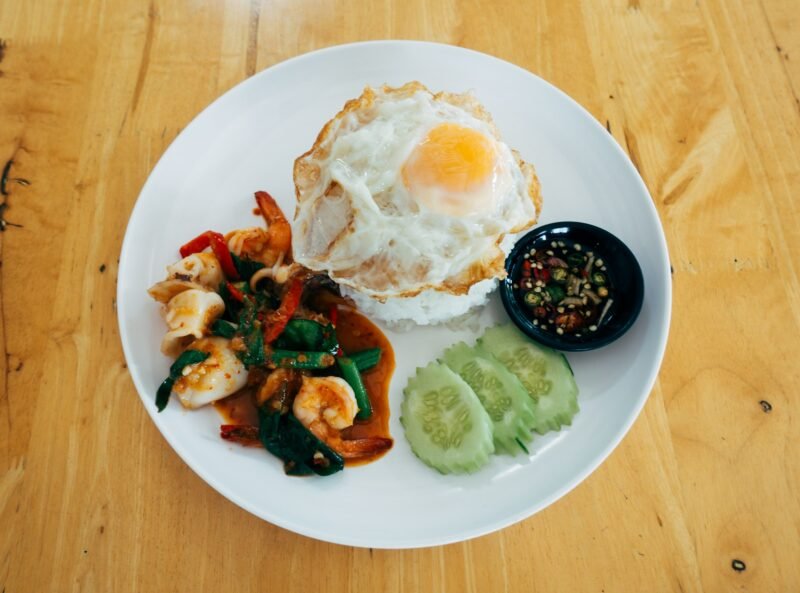
- Our pad kra pao recipe: cook one of Bangkok’s everyday classics at home.
- Coming soon: Bangkok food tours compared, and Thai street food prices and etiquette.

Leave a Reply